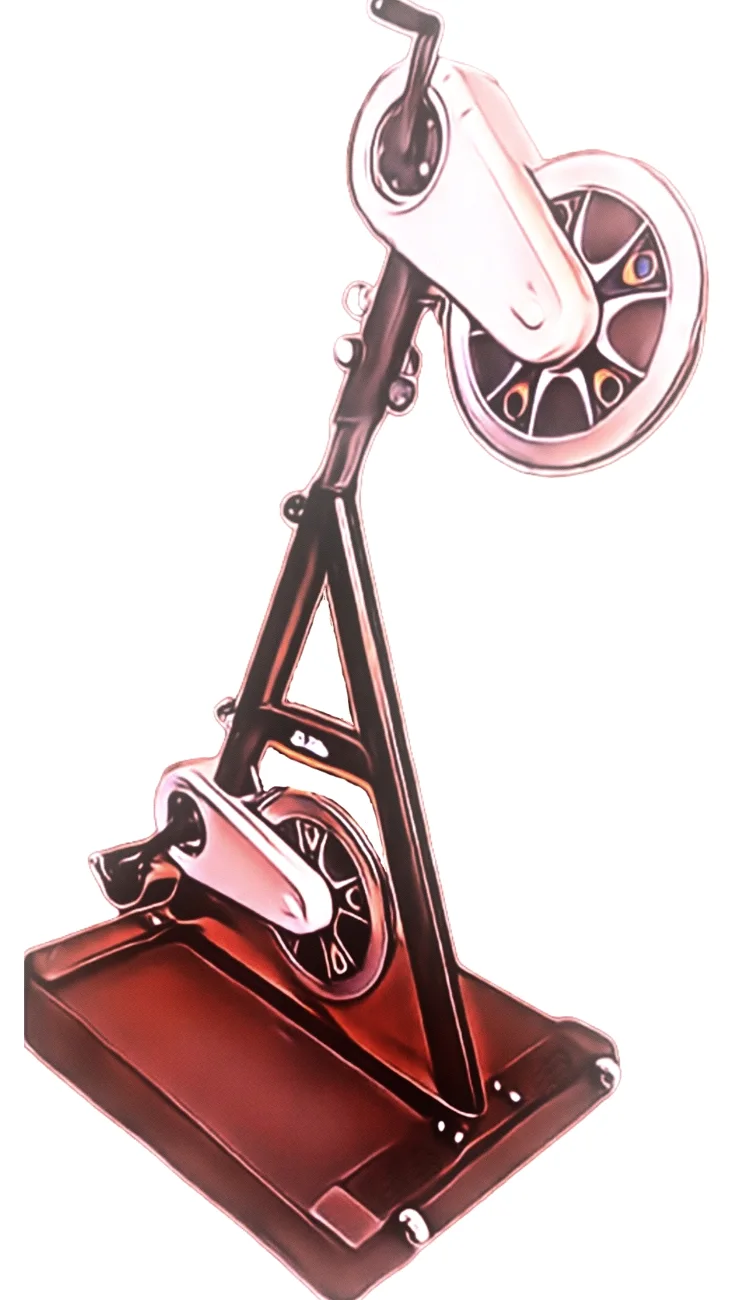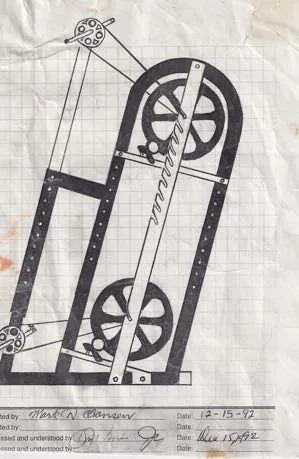
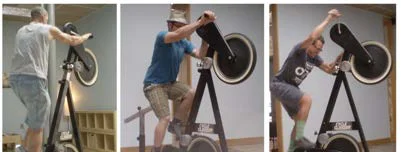
Two independent flywheels means you can change the workout just by changing how you hold on and which way you crank. Here's the cheat sheet I give everyone who climbs aboard.
- Reverse upper flywheel rotation works the pecs.
- Forward upper flywheel rotation works the lats.
- Being seated close to the upper flywheel (forward rotation) works the arms. More push.
- Being seated far behind the upper flywheel (forward rotation) works the lats. More pull.
- Holding the outside of the tapered grip (where the grip is wider) pumps up the forearms.
- Reverse handgrip (palms facing you) with forward upper rotation works the triceps.
- Reverse handgrip (palms facing you) with reverse upper rotation works the biceps.
- Not using the seat is easier than using the seat, because of the dual-flywheel inertia.
- The higher the flywheel, the easier the workout, because of the "pull-down" factor.
- A 20-minute workout at a 60 RPM average provides 1,200 rotary reps with resistance.
Most important
CycleClimbing is far easier than it looks! Swimmers love it. Boxers and UFC fans too. Most people don't even need a seat.
But honestly, no list does it justice. A hands-on demonstration is the only way to really feel the total-body workout.
Adapted from Marko's eBook, The World's Most Disrespected Inventor.